

USE CASES
One system.
Many ways to work.
Tagging for Windows adapts to the way different teams think, retrieve, and manage information - without forcing everyone into the same structure.
THE CORE INSIGHT
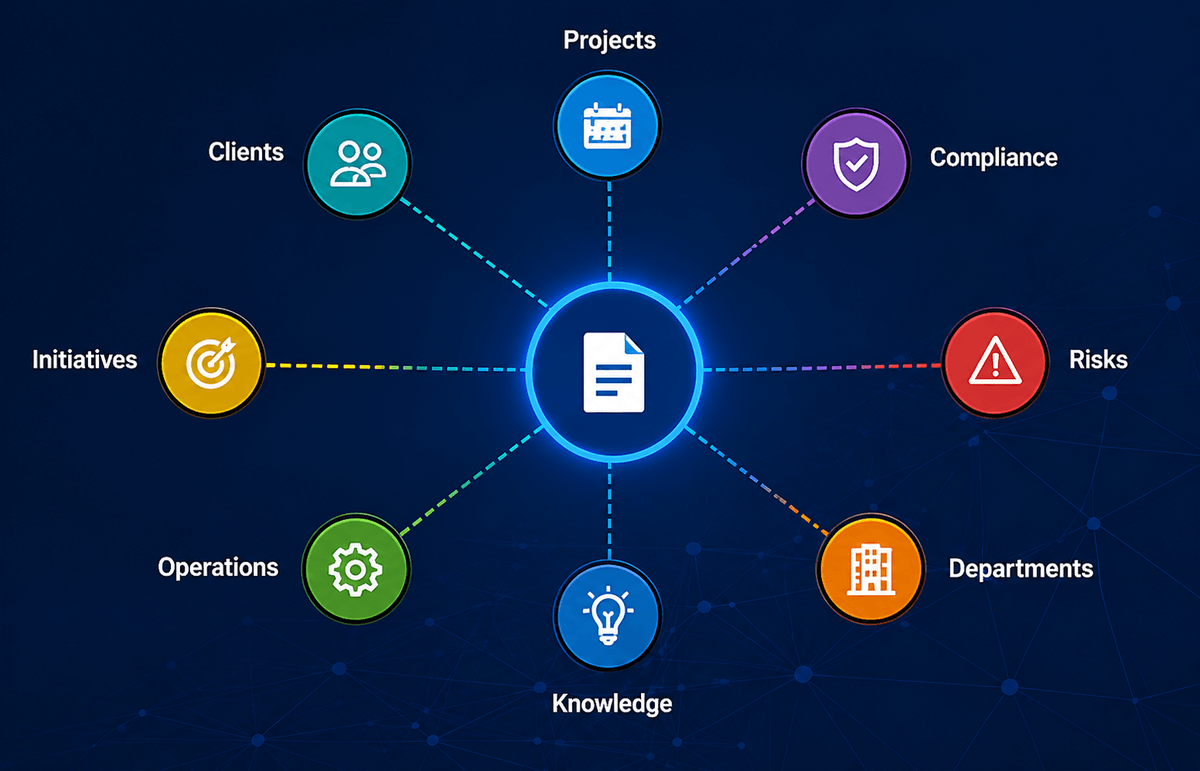
Information rarely belongs to one department.
Modern work is multi-dimensional.
Documents simultaneously relate to projects, initiatives, and timelines.
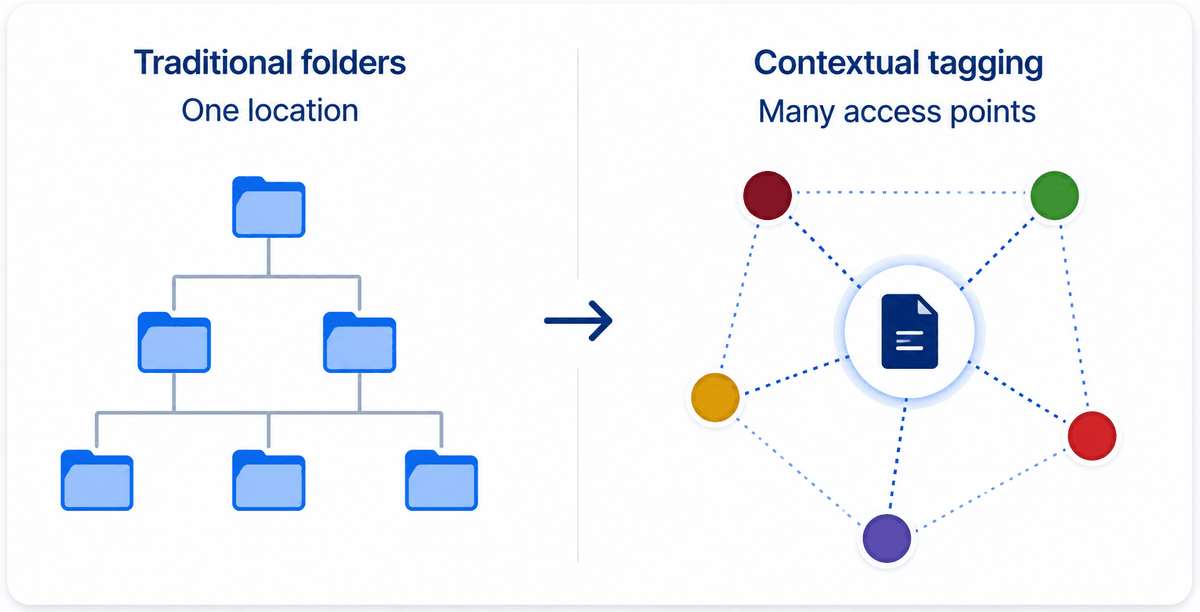
Traditional folders force one location.
Tagging introduces multiple contextual access points.
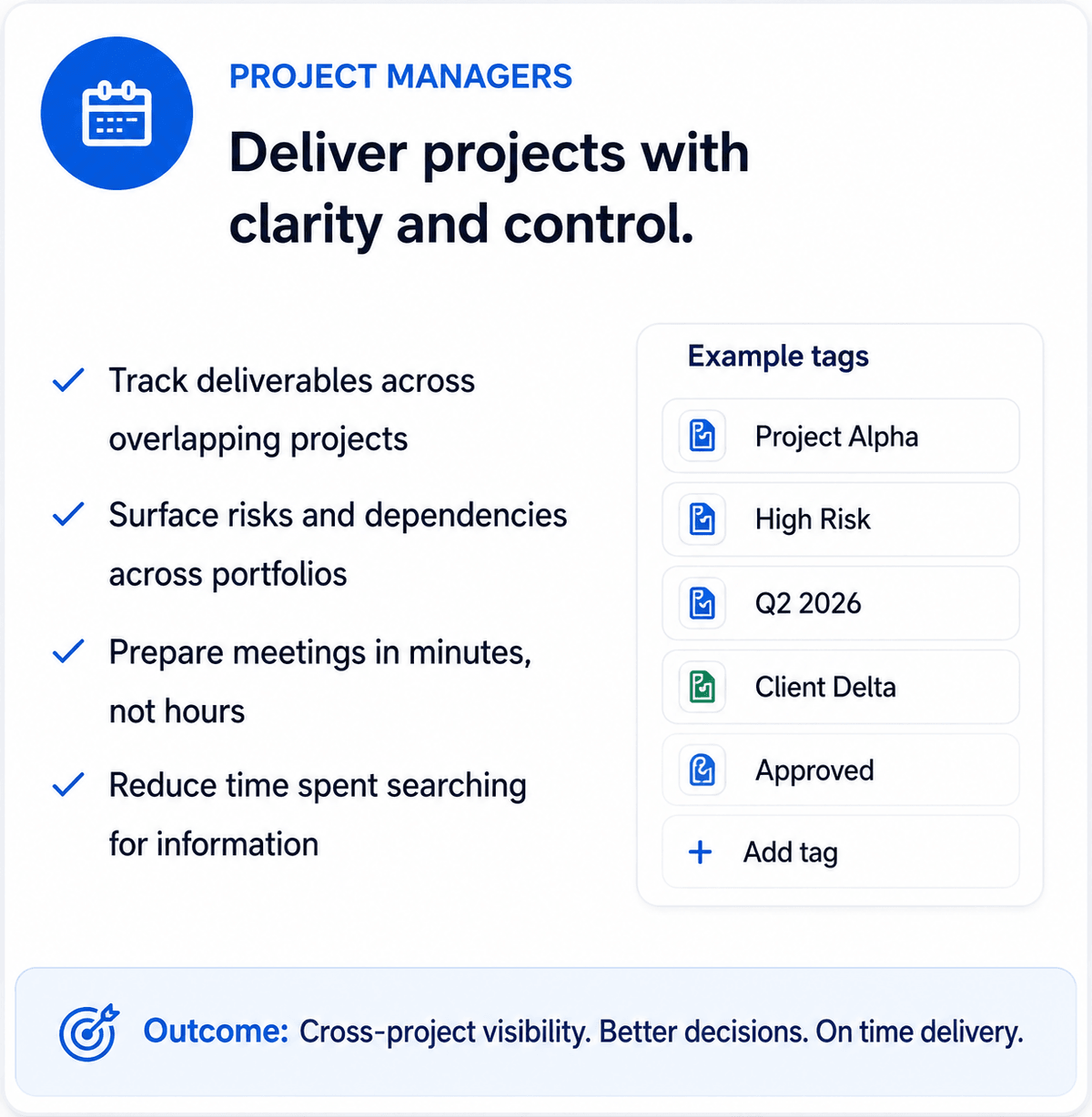
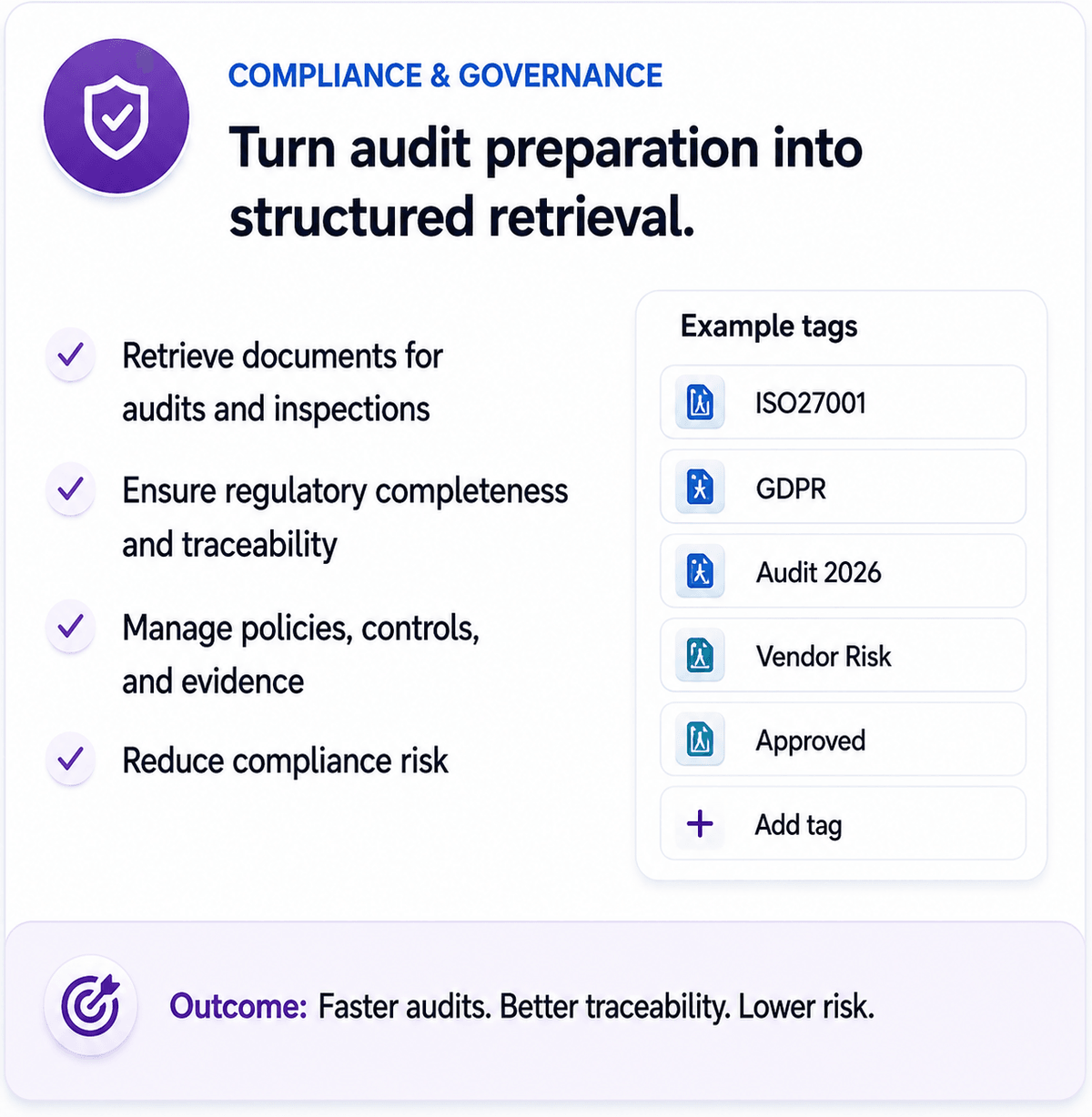
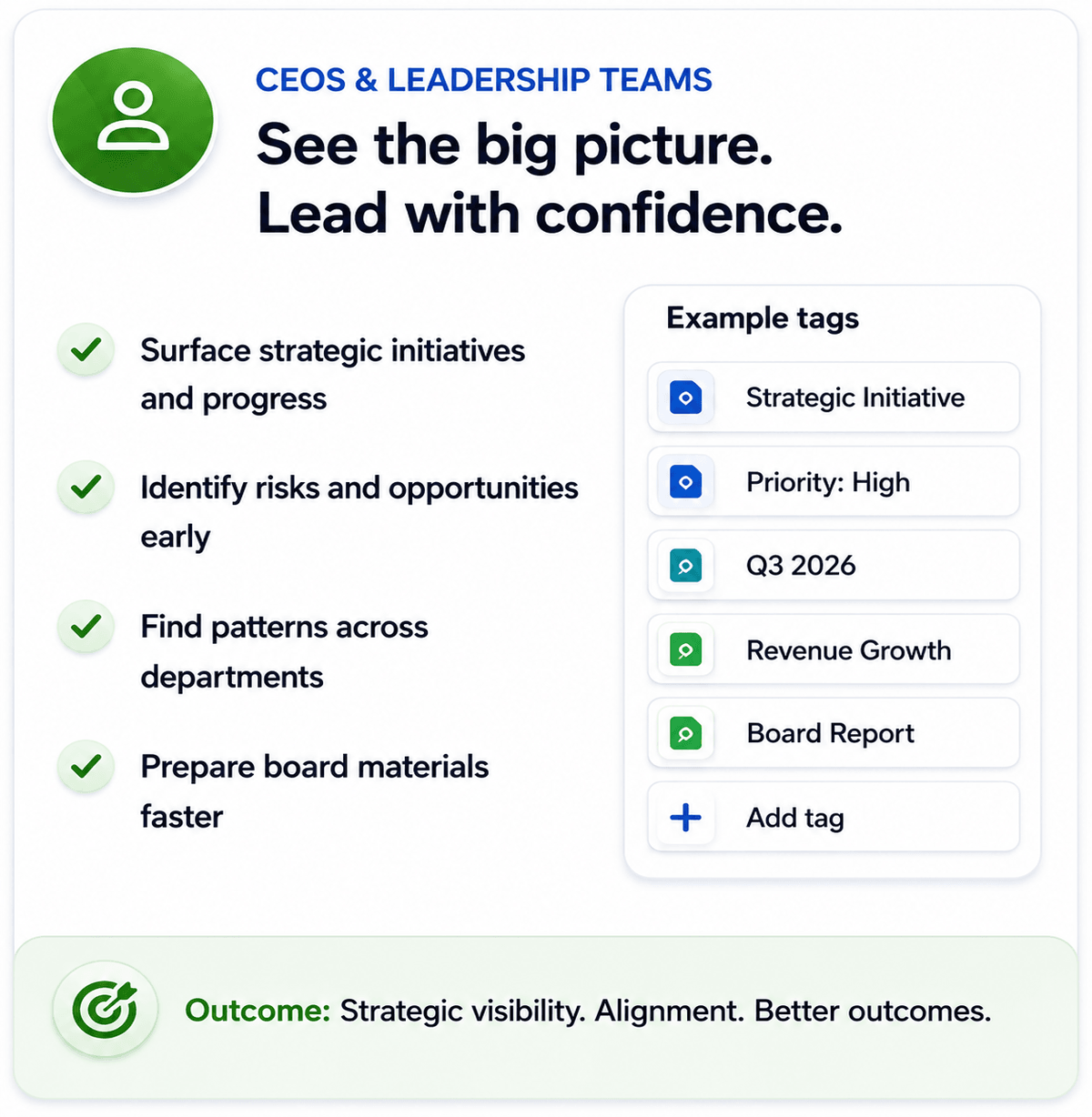
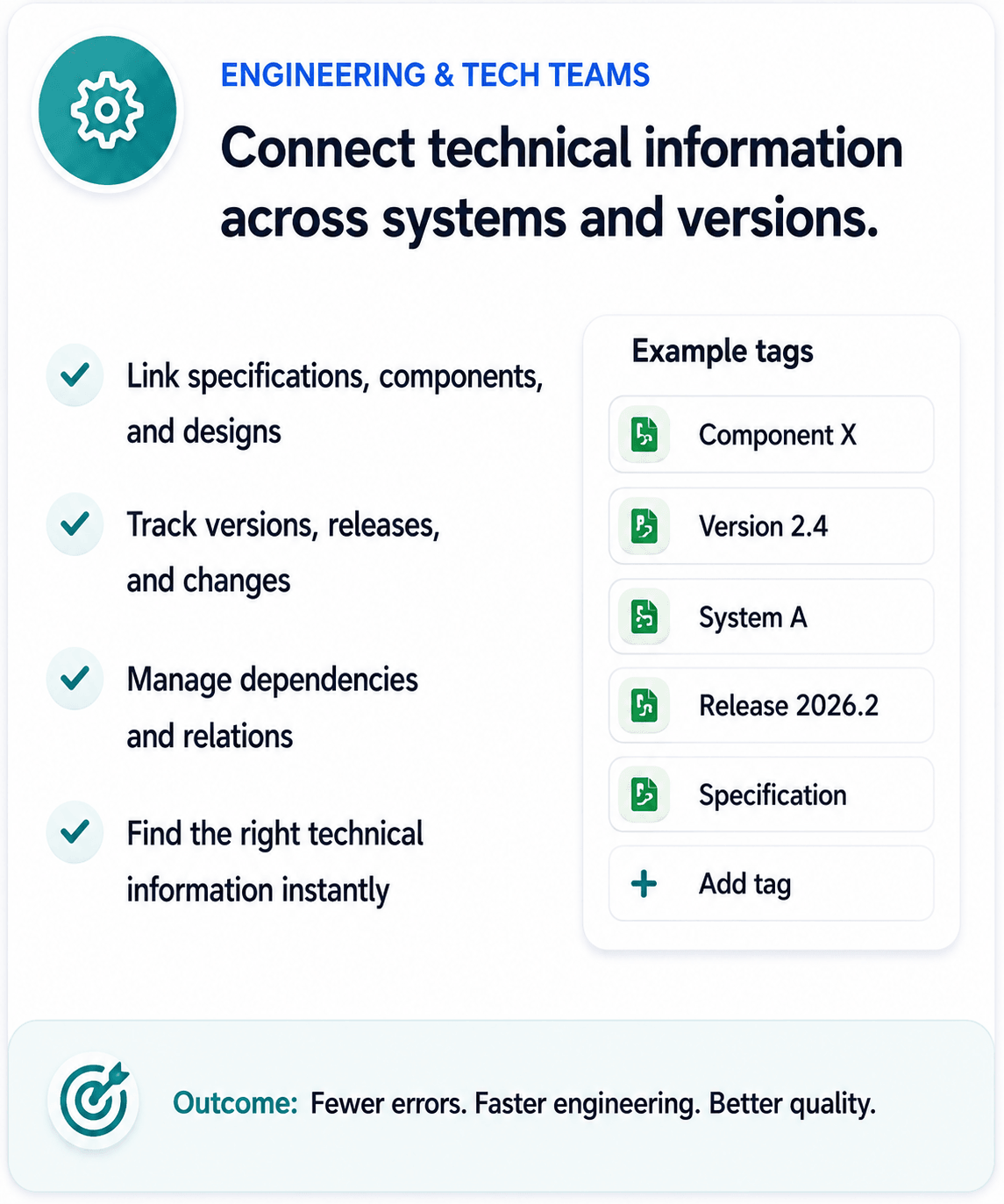
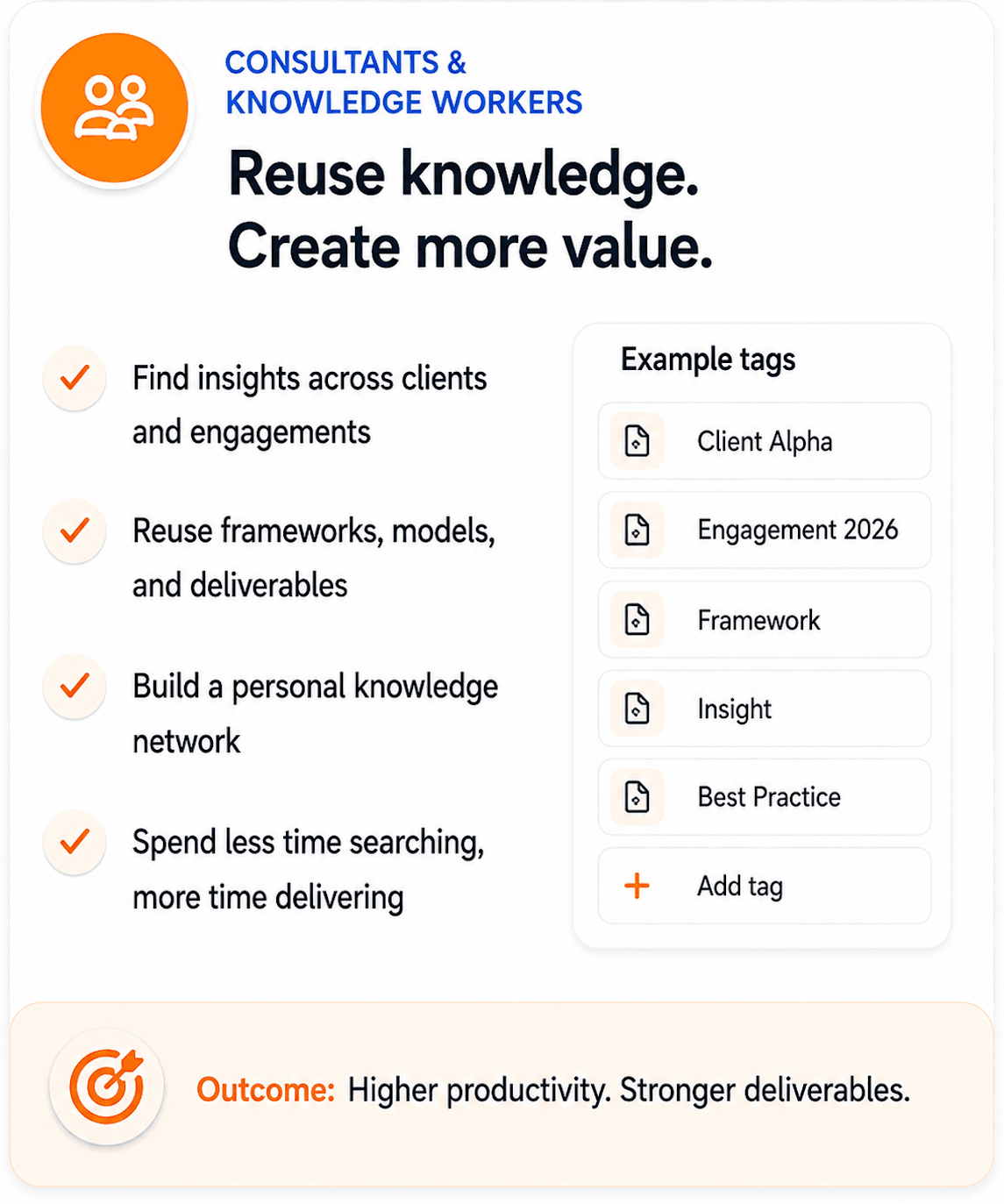
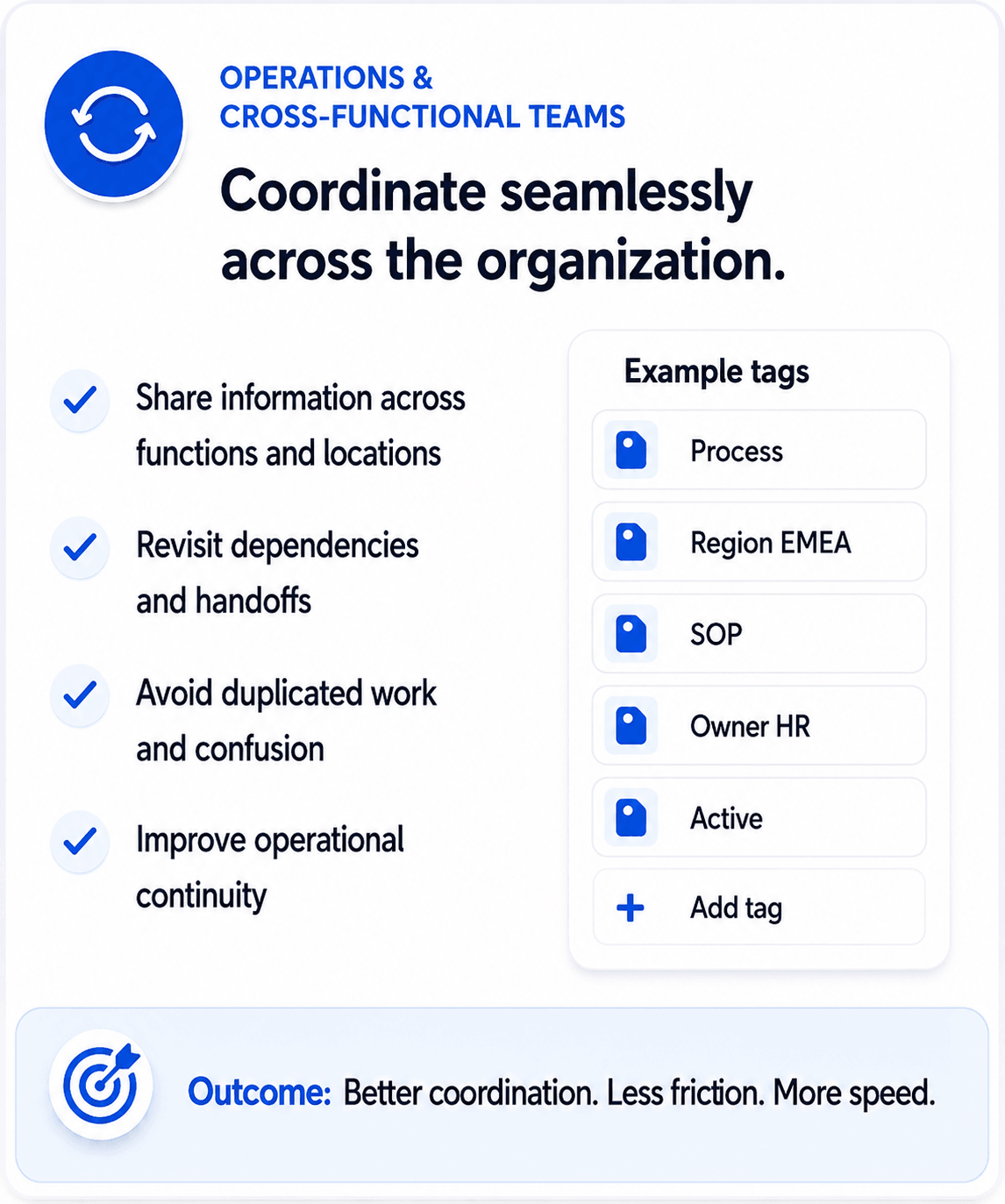
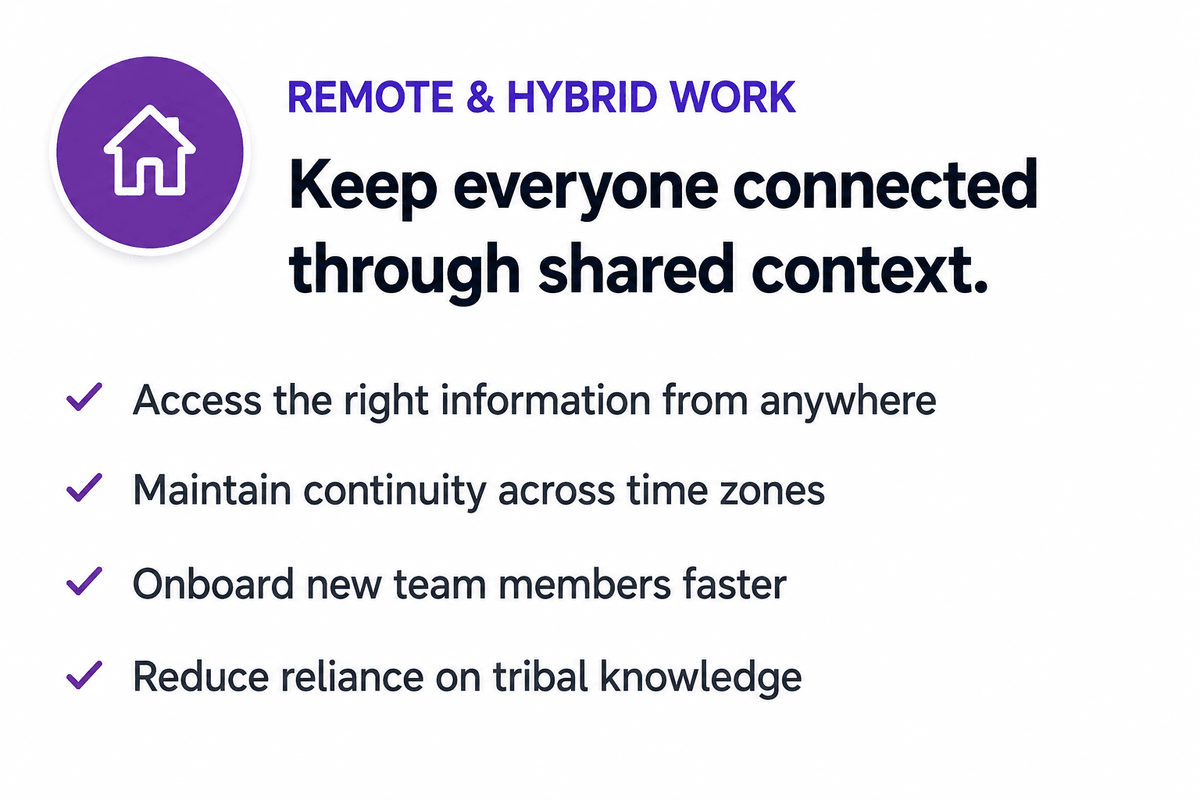
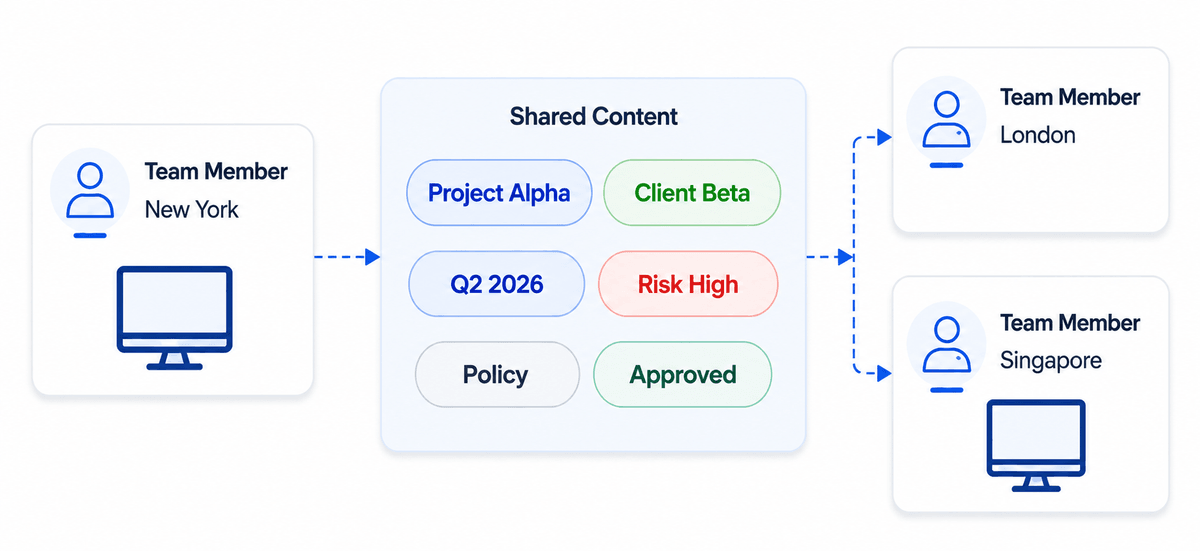
In distributed organizations, context becomes the connective issue.
Tagging makes knowledge visible, accessible, and actionable for everyone.
Outcome: Shared visibility, Stronger collaboration. Better results.
TAGGING MATURITY MODEL
From folders to contextual intelligence
Level 1
Pure hierarchy
Information stored in folders only.
Level 2
Ad hoc tagging
Tags used inconsistently.
Level 3
Structured personal tagging
Individuals use tags purposefully.
Level 4
Collaborative tagging
Team share and align on tags usage.
Level 5
Strategic context layer
Context drives visibility, insight, and decisions.

THE SECOND LAYER
More than organization.
Structural modernization.
"The Second Layer" explores why hierarchical systems struggle under modern complexity - and how contextual tagging transforms static file systems into intelligent knowledge environments.
"Folders are not wrong.
They are simply insufficient for the complexity of modern work."
- The Second Layer